
Africa faces the challenge of developing young people's skills
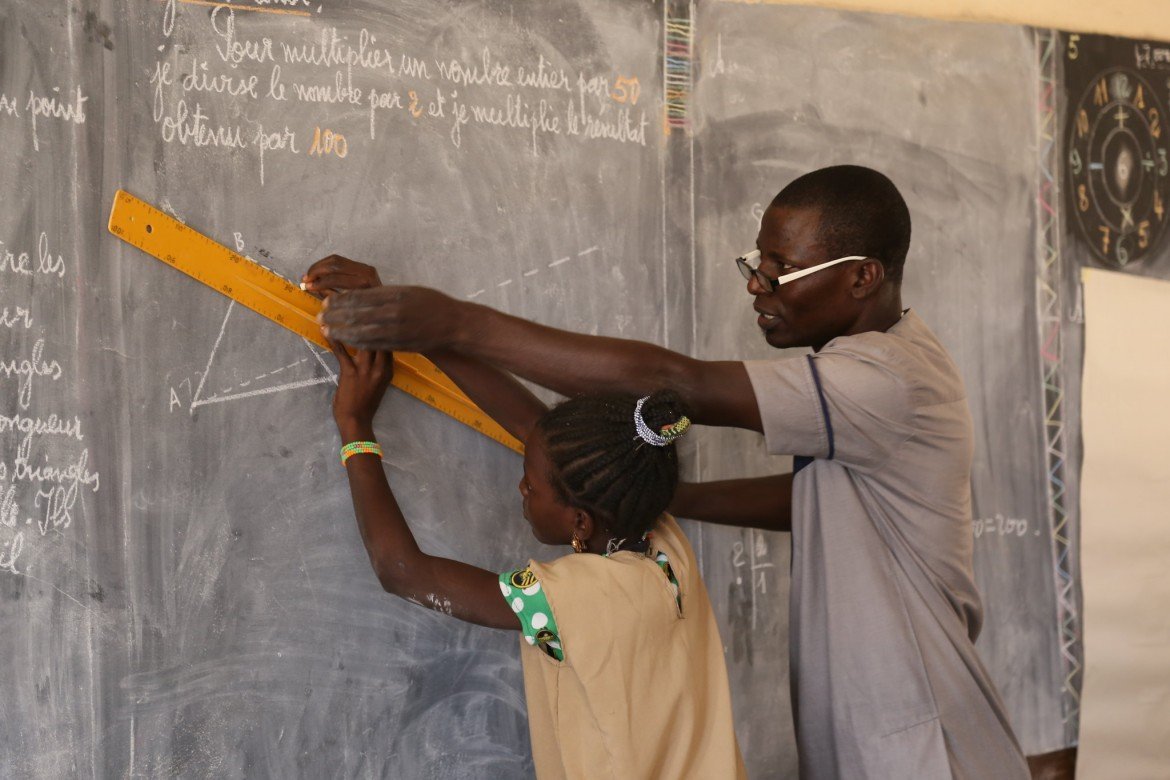
Faced with the critical situation of young Africans in terms of employment, ADEA's Inter-Country Quality Pole on Technical and Vocational Skills Development (PQIP-DCTP) intends to act as a catalyst for innovative policies and practices in the field of education and training in Africa.
This is the sixth blog post published in 2019 as part of a collaboration between the Association for the Development of Education in Africa (ADEA) and the Global Partnership for Education (GPE).
World Youth Skills Day highlights the importance of technical and vocational education and training (TVET) in giving young people the opportunity to develop their skills and accelerate their transition to the world of work.
The situation of young people in Africa
The employment situation of young Africans is complex in light of existing data on the economic situation and the labor market. This position becomes even more complex when considering job growth in Africa.
According to data provided by the International Labor Organization (ILO), the overall unemployment rate is around 7.5%. However, this rate, which is actually higher, must be interpreted in light of the specific realities of the African economy and labor market.
It goes hand in hand with a high proportion of young people seeking decent work (more than 25%), an underemployment rate of 67% of the working population, and a growing rate of precarious employment, which affects 70% of existing jobs.
Urgent action is therefore needed to enable young Africans to access decent jobs that allow them to earn a living.
In this context, ADEA's Inter-Country Quality Pole on Technical and Vocational Skills Development (PQIP-DCTP) meets the overall objective of acting as a catalyst for innovative policies and practices in the field of education and training in Africa. Since 2014, PQIP-DCTP has initiated the relationship between training, integration, and employment for young people in more than 20 African countries.
Key findings on the labor market in African countries
In recent years, the findings of technical meetings and conferences have highlighted the relevance of youth employment issues and the existence in most countries of a dual economy with a very large informal sector that has great potential for youth integration and job creation. The existence of initiatives in all countries to promote youth employment and the varying degrees of implementation and evaluation of the impact of training and employment policies and practices were repeatedly cited among the main findings made by experts.
With regard to the employment situation of young people, it should be noted that youth unemployment rates are very high, ranging from 13 to 28%.
On average, they are twice the national average in PQIP-DCTP member countries. Rates among discouraged youth are also very high.
In addition, in countries where data on new forms of apprenticeship are available, the rates of young people in this system are relatively high and higher than those of young people engaged in formal technical and vocational training structures.
With regard to the structure of the world of work, however, it is important to mention among the findings:
- the decline of existing industries in the face of competition from emerging countries (i.e., China, India, etc.)
- the predominance of the primary sector in all countries, with a few exceptions (e.g., Tunisia, Morocco, South Africa); and
- the disparity in the distribution of jobs between urban and rural areas.
Recent studies have shown that the difficulties young people face in accessing the world of work are linked to three main causes:
- The disconnect between the skills acquired in training and those required by the labor market, and, depending on the country, an increasingly significant phenomenon of unemployment among higher education graduates;
- Lack of knowledge about the labor market, i.e., the absence or insufficiency of information about the labor market; and finally
- Weak entrepreneurial culture and training.
To address these challenges, which vary in severity from country to country, measures are being implemented or considered.
Main measures in the field of TVET and job creation
The measures implemented in the field of technical and vocational skills development in countries cover various aspects, ranging from reforms to update existing training systems and pathways to schemes to train young people in the trades and jobs required by strategic or growth sectors, and including partnerships to better involve economic and professional actors.
On the other hand, with regard to measures planned or underway to promote job creation, the following must be mentioned:
- strengthening the professional skills of economic actors;
- incentives to encourage companies to hire young people;
- private sector development policies; and
- regional economic development policies.
Finally, several experiences of integration and job creation were presented and discussed at various technical meetings on the DCTP in Africa. These include: the implementation of various projects and programs to develop youth employability and promote salaried employment or self-employment, with financial and technical support from countries and/or partners; the establishment of direct aid mechanisms for companies for training in emerging and promising sectors; the establishment of innovation or expertise hubs such as business incubators for young people and/or management and coaching centers for companies created by young people or employing young people.
Education is the key to unlocking the potential of young people in Africa
Education and training are important factors for success in providing young people with the skills they need to enter the world of work, but also in helping businesses and communities adapt to changing skill requirements, increase productivity, and raise wage levels.
Young people are the future of every country, and it is up to us to provide them with all the necessary means to help them build their future.
