
2026 Strategic Retreat - Countries and partners align on reform priorities as ADEA drives shift to coordinated education delivery in Africa
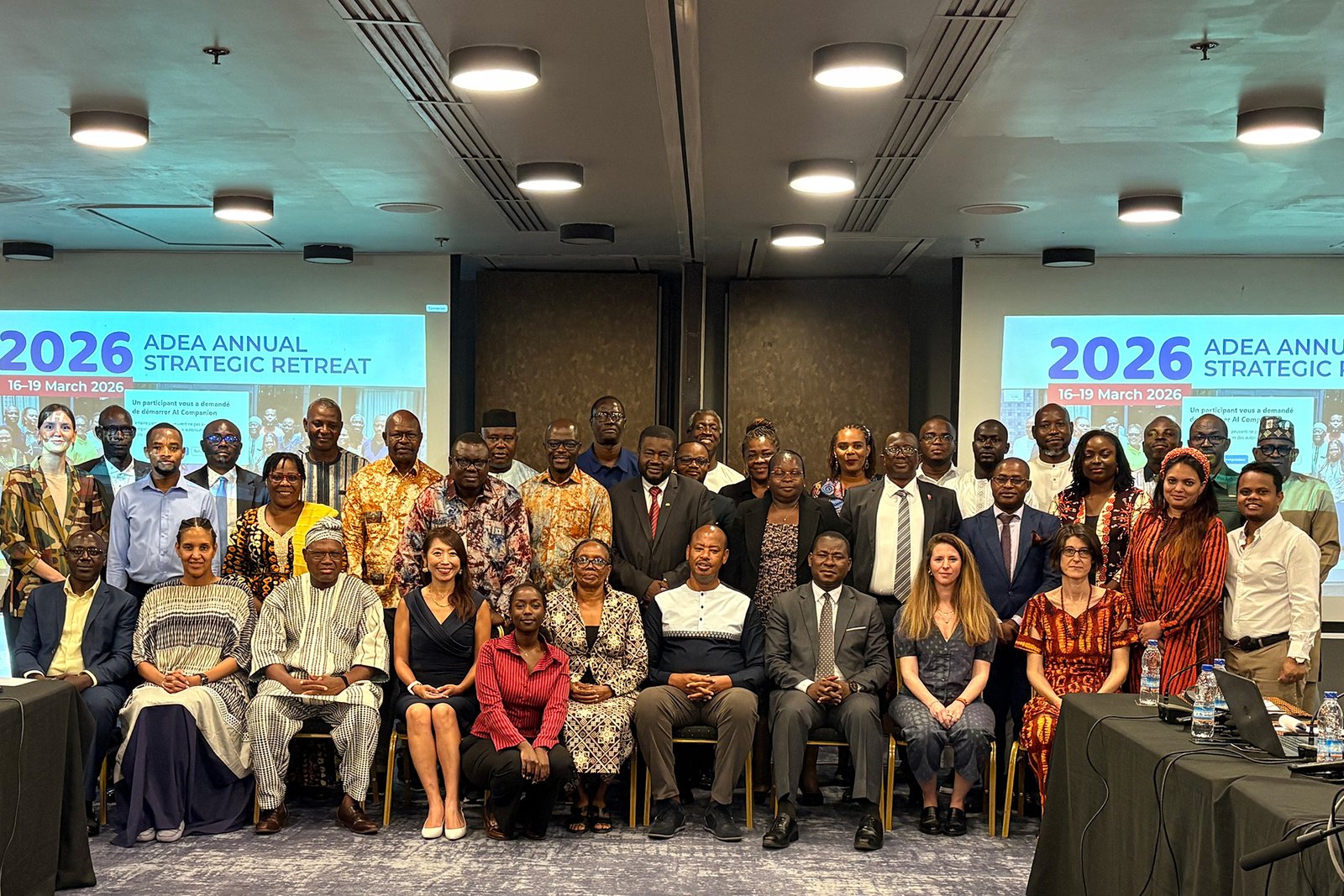
Governments and education partners at the 2026 ADEA Strategic Retreat have agreed to align efforts behind effective delivery of education reforms at scale. The retreat, held in Abidjan, Côte d'Ivoire from 17–19 March, brought together representatives from eleven countries and eight partner organisations — a significant increase from the previous retreat, which engaged six countries and two partner representatives. The expanded participation reflected a deliberate effort to ensure francophone country representation, following a 2025 retreat that engaged largely Anglophone member countries.
The sessions signalled a clear shift from commitment to coordinated implementation. The consensus across governments and partners was unambiguous: stronger collaboration — not necessarily new initiatives — will determine progress on education priorities and system resilience across the continent.
Countries in Focus
Countries used the retreat to reflect candidly on reforms underway and the delivery challenges they face. In Senegal, bilingual education using national languages is showing strong potential to improve foundational learning outcomes. Côte d'Ivoire is advancing data-driven reform, including performance-based financing models that link funding to results. In Benin, school feeding programmes have improved attendance, reduced dropout rates, and contributed to better learning outcomes.
Mauritania and Togo are strengthening structured pedagogy and teacher development systems through continuous professional development. Guinea is exploring innovative financing mechanisms and digital learning solutions to expand access and improve system efficiency. Gabon is reforming its curriculum, expanding technical and vocational pathways earlier in the system, and leveraging technology and local knowledge to improve relevance and reduce failure rates.
Innovation is also emerging in more complex environments. Niger is using community-based approaches and flexible schooling models to sustain education access in insecure areas, supported by digital content. In Mali, the declaration of 2026–2027 as the Year of Education signals strong political commitment to reform, with efforts focused on bilingual education and anchoring reforms within state-led planning frameworks. The Central African Republic is rebuilding through a sector-wide plan to expand qualified teachers, ongoing training initiatives, and community-supported reintegration of out-of-school children, alongside digital and multilingual pilots in underserved areas.
Across all contexts, countries identified shared constraints: shortages of qualified teachers, limited financing, weak data systems, and gaps between policy and implementation capacity — particularly in crisis-affected settings where school closures and insecurity remain significant barriers.
Partners Respond
Development partners echoed the call for stronger coordination and alignment. The African Development Bank — ADEA's host institution — stressed the importance of aligning investments with national strategies and moving toward programmatic, large-scale interventions, highlighting advanced efforts to operationalise the African Education, Science, Technology, and Innovation Fund (AESTIF). The World Bank highlighted results-based financing approaches that reward performance and improve accountability.
The Gates Foundation emphasised foundational learning as the entry point for system transformation, noting that improving early learning outcomes strengthens overall system efficiency. The Mastercard Foundation underscored the urgency of rethinking secondary education and skills pathways to prepare young people for the future of work. UNICEF highlighted the need for resilient, scalable systems — particularly in crisis and climate-affected contexts — with a focus on data, digital transformation, and equity. The International Labour Organization called for greater policy coherence across sectors, stronger skills development standards, and closer alignment between education systems and labour markets. Speak Up Africa underscored the role of advocacy, citizen engagement, and communications in sustaining momentum and ensuring accountability for results.
ADEA's role as a neutral continental convener was strongly reaffirmed throughout. Wariko Waita, Director at the Mastercard Foundation Centre for Innovative Teaching and Learning, described ADEA as
"a continental leader, a strategic and trusted partner in education."
ADEA Executive Secretary Albert Nsengiyumva reinforced the organisation's direction:
"Africa does not lack ideas or commitments. What we need now is alignment and delivery. ADEA's role is to bring countries and partners together around shared priorities, ensure coherence in how support is provided, and help translate policies into actions that deliver real results for learners."
Looking Ahead
The retreat was anchored on the 2025 strategic mandate and the Walk the Talk monitoring framework from the 2025 ADEA Triennale, aligned with ADEA's five-year Strategic Plan 2024–2028 and continental frameworks including CESA 26-35, STISA 26-35, and the CTVET Strategy 2025–34.
Going forward, ADEA will focus on strengthening country engagement, improving coordination mechanisms, and ensuring that data, financing, and implementation are better aligned to deliver impact at scale — tracking progress against the 2025 Triennale recommendations and making delivery the central measure of success.
