
ADEA collaborates with country delegates and partners in Delhi to advance South-South knowledge exchange on foundational learning reforms
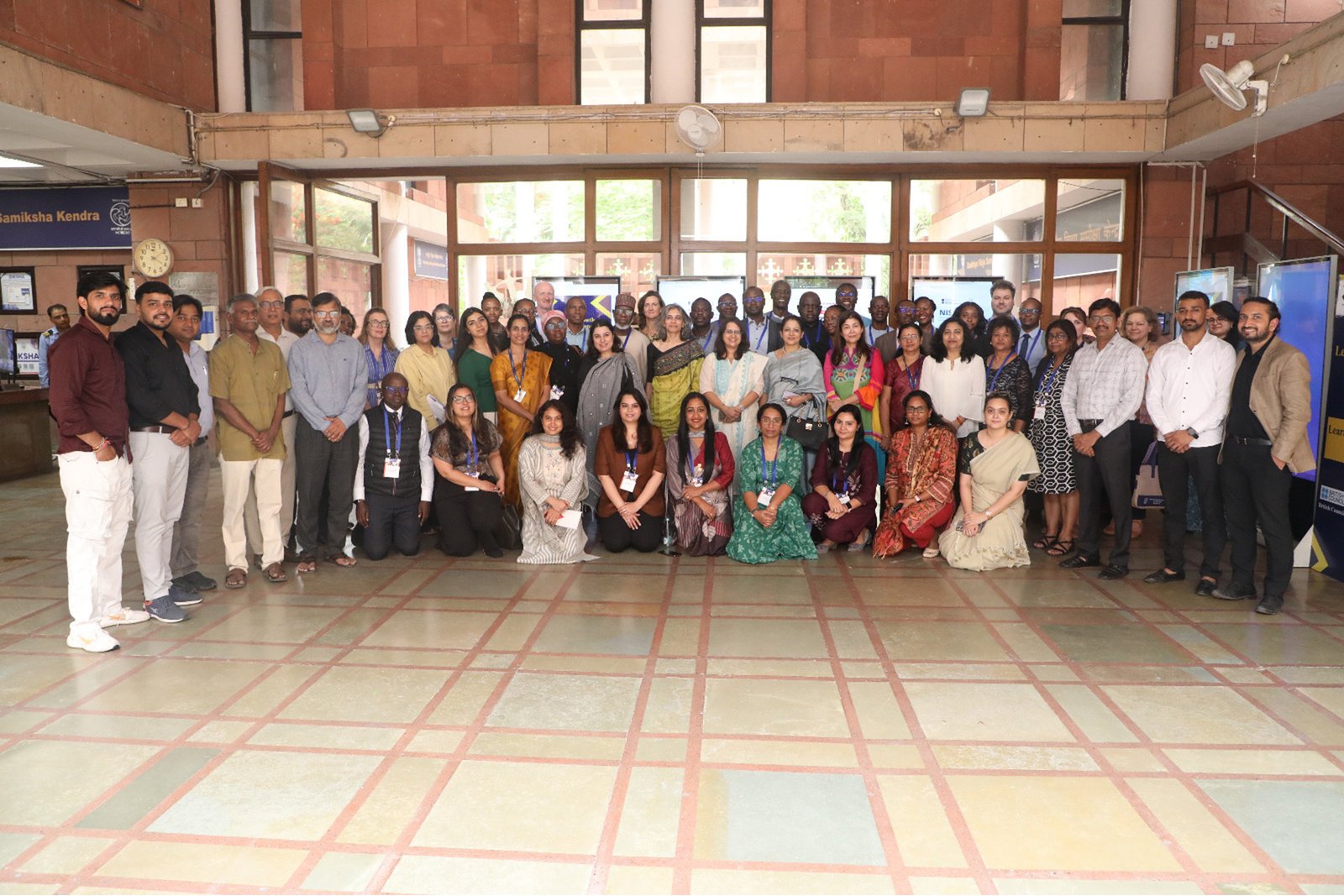
From the 4th to 8th of May 2026, ADEA’s Senior Programs Officer, Shem Bodo, joined country delegates and partners for a knowledge exchange mission at the South-South Learning Symposium held in New Delhi, India. The Symposium, co-organised by the What Works Hub for Global Education (WWHGE) and the British Council, and supported by the UK Foreign, Commonwealth & Development Office (FCDO) — brought together senior Ministry of Education officials from eight African countries, Nepal, and India; education policy leaders; reform champions from Africa and South Asia; alongside Indian national and state-level leaders and global education partners. It explored how developing economies are achieving transformative gains in foundational learning outcomes. India's national curriculum body, the National Council for Educational Research and Training (NCERT), served as a central hosting partner.
This visit builds on a first high-level exchange in September 2025, which brought together principals of the Global Coalition for Foundational Learning (GCFL) for an initial round of structured peer learning. The May 2026 Symposium represents the next stage of an expanding programme — deepening engagement and broadening the range of African countries and institutions involved. The South-South exchange framework is embedded in key resolutions and outcomes of South Africa's G20 Presidency, which has given significant momentum to structured learning between developing economies. In response to these commitments, South Africa has championed the IBSA Coalition — a trilateral partnership between India, Brazil, and South Africa (IBSA) — as a vehicle for peer learning among economies that share comparable education realities and have demonstrated measurable progress in foundational learning reform. For ADEA and its member countries, the IBSA approach directly offers applicable lessons: how data-driven policy, coherent curriculum design and delivery, and sustained investment in teachers can move the needle on learning outcomes at the foundational level for millions of African children.
Those themes were very much at the heart of what the New Delhi Symposium explored. Over five days, delegates shared best practices on foundational learning and got exposed to India’s education ecosystem, implementation models and data use through digital dashboard. This facilitated a better understanding of vision-driven and institutionalized foundational learning assessments and data-driven accountability frameworks for evidence-informed decision making and to drive systemic reform.
Based on a programme that combined structured policy exchanges with direct field experience, the delegations examined how India has built evidence and data systems that inform policy decisions at scale, and how African countries can adapt similar approaches in their own contexts. Conversations around teaching pedagogy and curriculum development probed how instructional design has been aligned with foundational learning goals, while sessions on teacher professional development explored in-service training models and coaching support systems that have helped sustain reform over time. Critically, the delegation also undertook site visits to schools and educational institutions, gaining first-hand experience of how foundational learning is delivered in the classroom and how broader policy frameworks translate into everyday practice on the ground, leveraging digital technology.
Reflecting on the experience, Shem captured the significance of what the delegation witnessed:
"What we experienced here is the intersection between data, accountability, technology, and learning outcomes. It is not just the data production — it is also the use of that data which is so important. We saw a case where policymakers and ministers can easily access data on dashboards, alongside school leaders and managers, and that is critical because we need that data to make informed decisions. We are very proud to be part of this, and we do hope that we can gain from India and share these lessons at the continental level — to promote foundational learning and make it a truly salient aspect of our education agenda."
These reflections point to something larger than a knowledge-sharing visit. For ADEA, the South-South exchange is a deliberate advocacy instrument — one being driven alongside its member countries, WWHGE, GCFL, and a growing network of development partners. The core ambition is to put additional evidence of what works in foundational learning directly at the disposal of ADEA member countries, building an evidence pipeline that is both contextually relevant and politically actionable. Insights from the New Delhi Symposium will feed directly into upcoming exchanges and policy processes, including the Africa Foundational Learning Exchange (FLEX) 2026 in Malawi — where the lessons gathered in India are expected to inform concrete country-level commitments.
Each of the nine country delegations, supported by individual partner representatives, produced a work plan with clear actions and timelines – a recurring feature in the work plans was the need to sustain peer learning and knowledge exchange among the countries at the Symposium. This will ensure that lessons drawn from exchanges are not simply observed but actively integrated and implemented within national education reform agendas.
Going forward, the programme will scale its ambition further. Future exchanges will seek to engage senior policymakers, including ministers, so that the learning is not confined to the technical level but reaches those with the authority to drive systemic reform. In this way, the South-South exchange becomes more than a series of visits — it becomes a structured pathway from evidence to action, from learning poverty to learning richness, and one that ADEA is committed to deepening with each successive stage.
