
From assessment to action: ADEA and Elimu Soko launch AFLAI to advance country-led foundational learning assessment in Africa
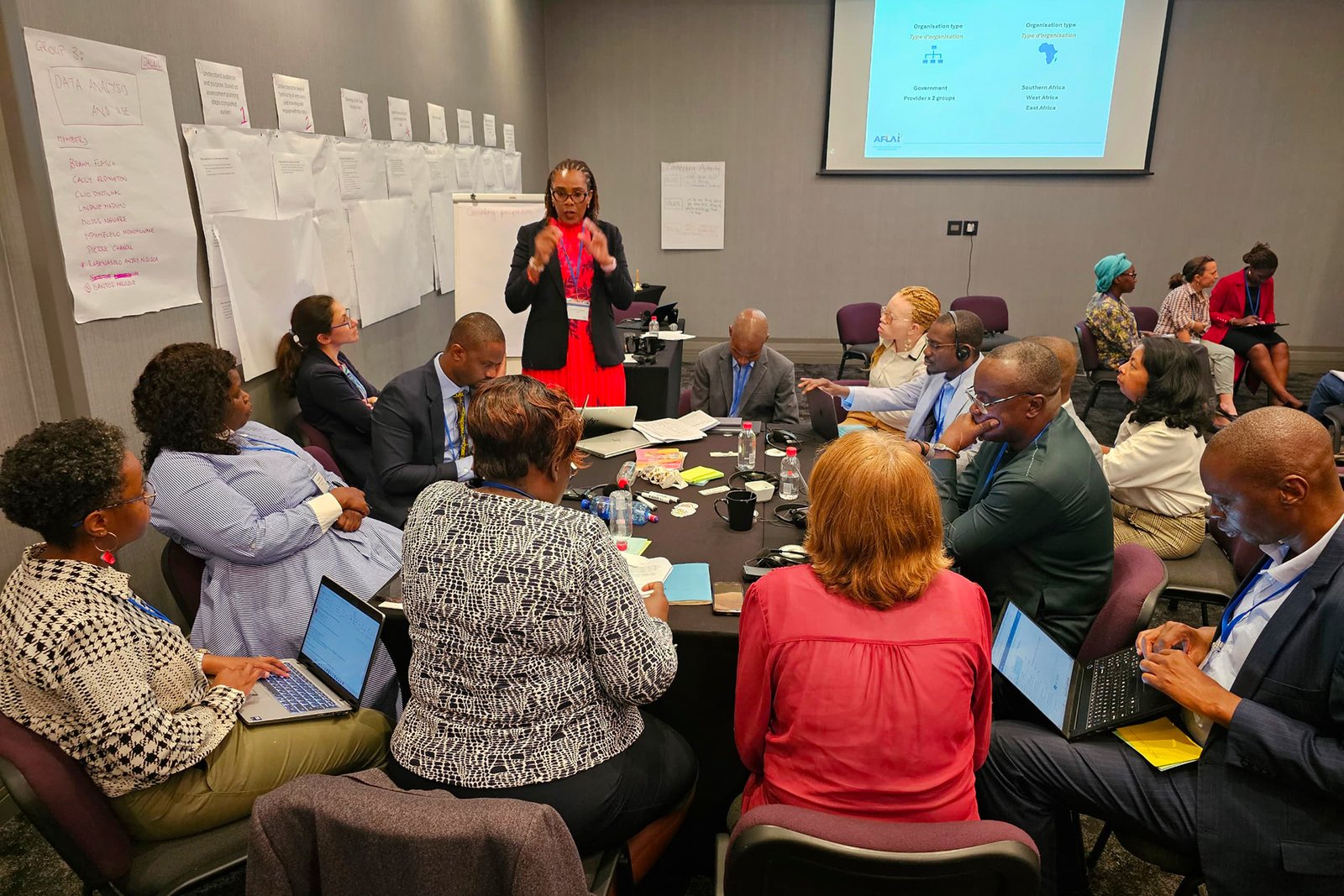
As African countries accelerate efforts to improve foundational learning, strengthening how learning is measured and translated into action remains essential to improving education outcomes. On Tuesday 3 November 2026, the Association for the Development of Education in Africa (ADEA) and Elimu Soko marked an important step toward strengthening country capacity in learning assessment, with the launch of the Africa Foundational Learning Assessment Initiative (AFLAI) during a virtual webinar themed “Measuring Progress in Education Systems: From Student Learning Outcomes to Sustainable Systems Change.” Bringing together education policymakers, national assessment representatives, technical experts and development partners, the launch introduced a new avenue for country-led technical support, building on existing assessment efforts to strengthen foundational literacy and numeracy across Africa.
Opening the webinar, ADEA Senior Foundational Learning Expert, Dr Jacqueline Jere-Folotiya, emphasized the importance of timely evidence to support policymaking.
“The evidence that the African governments rely on should arrive in time in order to matter, stand up to scrutiny, and be accessed within the reach of the decisions leaders actually make.”
She reaffirmed ADEA's commitment to keeping AFLAI responsive to national priorities by connecting governments with peers and experts, facilitating knowledge exchange and sharing practical lessons across African education systems.
In her message to participants, Senior Program Officer in Global Education at the Gates Foundation, Clio Dintilhac, highlighted growing continental momentum in foundational learning, including stronger government engagement and improvements in reading outcomes in several countries. She emphasized the value of targeted technical expertise in helping governments build on this progress and strengthen their assessment practices.
Presenting the initiative, Deputy Director of Elimu Soko, Muna Ngenda, explained that AFLAI was a product of consultations with African governments to address country-identified foundational learning assessment needs. Its support to countries covers six areas: assessment policy, system architecture, tool development, implementation, data analysis and use, and benchmarking and reporting. Rather than introducing new assessment structures, AFLAI seeks to strengthen national capacities through tailored technical assistance.
Country experiences from Zanzibar, Senegal and Madagascar demonstrated the assessment work already underway. Zanzibar has introduced literacy and numeracy assessments aligned with its revised curriculum, drawing on Early Grade Reading Assessment (EGRA) and Early Grade Mathematics Assessment (EGMA) approaches. Senegal conducts quarterly formative assessments and monitors learning through pre- and post-tests, while developing approaches aligned with its Harmonized Bilingual Education Model (MOHEBS). Madagascar undertakes national assessments in mathematics, French and Malagasy, with ongoing improvements to assessment instruments and data analysis.
Building on these efforts, country representatives outlined their priority technical needs. Dr Rashid Mukki, Director of the Examinations Council in Zanzibar, highlighted plans to assess English proficiency among Standard Four learners transitioning to English-medium instruction. Dr Cheikh Bèye, Primary Education Inspector and Coordinator of MOHEBS in Senegal, emphasized harmonizing assessment tools, developing item banks and establishing proficiency benchmarks. Henintsoa Ratovo Tahaka, Head of Data and Statistics at UEAS in Madagascar, identified clearer performance levels and competency descriptors as priorities for interpreting results and informing remedial support.
Early discussions with AFLAI are exploring how these priorities could be addressed. Madagascar has reviewed a concept note focused on improving the interpretation and application of national assessment findings, following exchanges facilitated by FHI 360. Senegal has discussed support for assessment development, data management and capacity strengthening, while Zanzibar has explored technical cooperation on its proposed English proficiency assessment. These engagements remain preliminary, with potential support being shaped around existing national programmes.
Providing a regional perspective, Hilaire Hounkpodote, PASEC Coordinator at CONFEMEN, presented findings from the 2024 PASEC assessments that were released on 22nd October. At the beginning of primary education, approximately six in ten learners reached the assessed reading competency threshold and seven in ten did so in mathematics. At the end of primary education, the corresponding figures were approximately 38% and 25%. Although the results concern different groups of learners, they highlight the need to monitor learning across education cycles and respond to emerging difficulties.
Hounkpodote highlighted challenges related to teachers' mathematics knowledge, unequal access to learning resources and differences in school conditions. Several participating education systems recorded declines in end-of-primary performance between assessment rounds, raising questions about the effects of disruptions such as COVID-19 and the need to strengthen education system resilience.
Country representatives explained how regional findings complement national assessments. Senegal uses PASEC to understand broader trends and draw lessons from other countries, while regular assessments support targeted remediation. Madagascar combines regional comparisons with curriculum-specific national results. In Zanzibar, assessment findings inform annual education sector reviews, teacher training and follow-up by school inspectors. These experiences illustrate how different sources of evidence can serve distinct but complementary purposes in education planning.
The discussions brought together two perspectives: national assessment systems provide context-specific evidence, while regional assessments help identify wider learning patterns and shared challenges. Strengthening the relationship between these sources can help governments make more informed decisions about teaching, resource allocation and education reforms.
Through AFLAI, ADEA and Elimu Soko aim to support countries in addressing their identified assessment priorities. Governments interested in engaging with the initiative were encouraged to outline their needs through the AFLAI website as a starting point for follow-up technical discussions. The initiative offers an opportunity to build on existing progress and translate assessment evidence into targeted interventions and sustained improvements in foundational learning.
