
Countries provide first update to ministerial coalition in implementing ADEA 2025 Triennale recommendations on foundational learning
On Thursday, March 26th, the Africa Foundational Learning Ministerial Coalition (AFLMC) convened for its 10th session, bringing together education ministers, policymakers, and development partners from across the continent. Chaired by the Minister of Basic and Senior Secondary Education, Sierra Leone Hon. Conrad Sackey, the meeting set the tone for crucial conversations on foundational learning progress across African countries. Since its inception, the Coalition has continued to grow, and through this platform, countries have continued to cement their commitment to foundational learning, including ending learning poverty by 2035.
This 10th edition is the first after last year’s Triennale and the focus included progress updates in implementing agreed recommendations in Accra relating to foundational learning, as we look forward to FLEX2026 in Malawi later in July this year. In his remarks to open the session, Minister Sackey reinforced the urgency of action, calling on countries to move decisively from commitment to measurable impact. “History will not remember the meetings we held. It will remember the lives we changed,” he stated, urging fellow Ministers and policymakers to demonstrate courage in implementation, discipline in execution, and unity in advancing the continent’s foundational learning agenda.
The opening remarks by Hon. Sackey were followed by an update on India-Brazil-South Africa (IBSA partnership) and the outcomes from the G20 convening. In her intervention, South Africa’s Minister of Basic Education, Hon. Siviwe Gwarube, insisted that Africa’s children deserved nothing but excellence. To realize this, she showcased how her country amplified Africa’s foundational learning yearnings and expectations during South Africa’s G20 presidency, culminating in its inclusion in the G20 Leaders Declaration. She then announced plans to establish a Quality Foundational Learning Network under the IBSA partnership, as a legacy initiative to strengthen collaboration across the Global South. She said South Africa will work with ADEA and the Ministerial Coalition to ensure Africa’s voice remains strong on foundational learning efforts. She then called on countries to deepen collaboration, share evidence-based solutions, and avoid duplicating efforts.
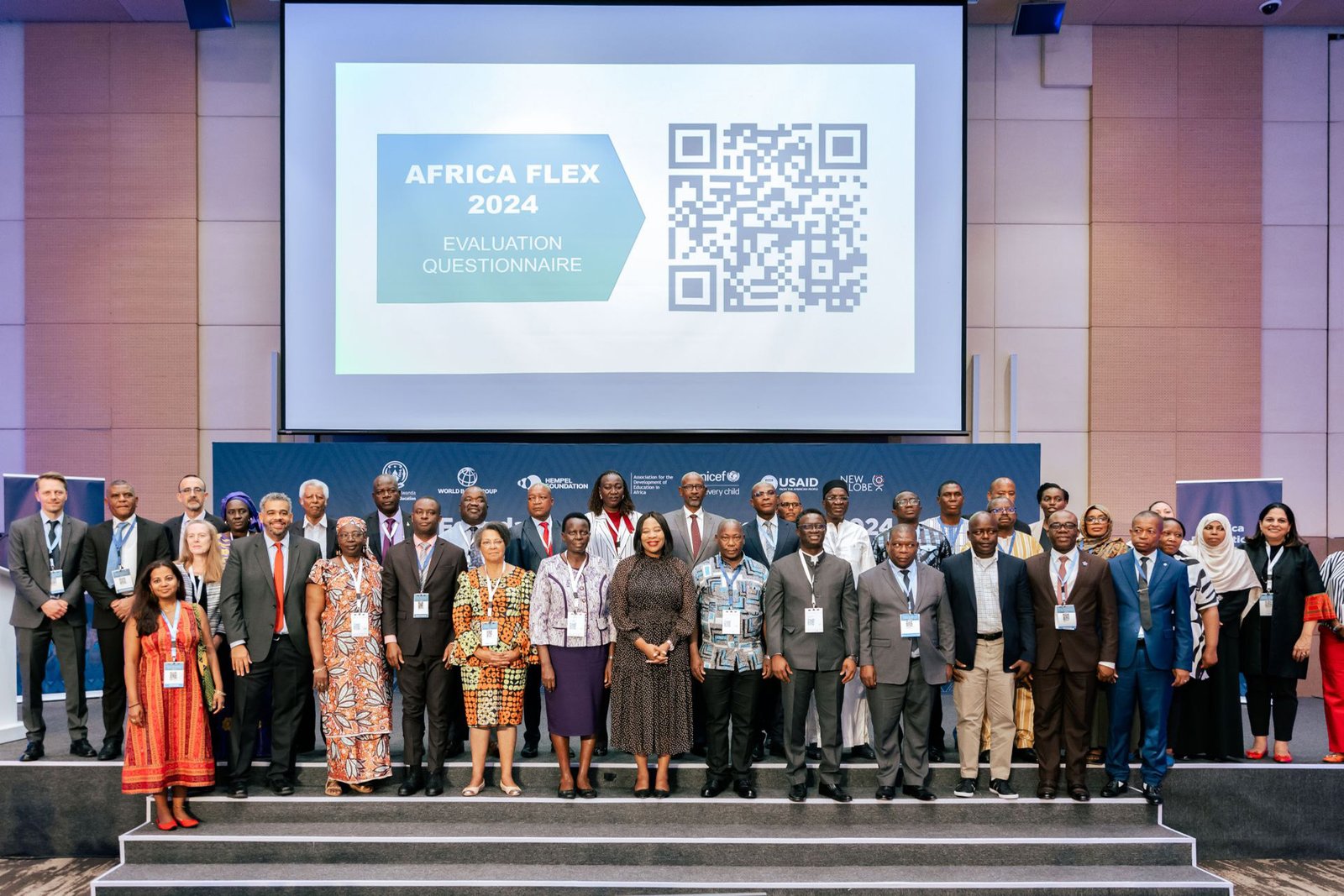
The session also reflected on the six resolutions from the foundational learning sessions at the ADEA Triennale, which collectively define the Coalition’s action agenda for 2026-2028, as well as the Africa Foundational Learning Exchange 2024 (FLEX2024) commitments, which will shape conversations at FLEX2026 in Malawi. These include strengthening the use of data for real-time decision-making, prioritizing multilingual instruction, scaling proven pedagogical approaches, improving school readiness and retention, financing foundational learning, and aligning national assessment systems with continental frameworks. Together, these pillars are designed to accelerate improvements in learning outcomes at scale.
Country updates were a major highlight of the meeting, as country representatives on the call demonstrated the required accountability around their progress and challenges. Across the board, there was a growing emphasis on the implementation of reforms. Sierra Leone reported significant strides in scaling evidence-based pedagogy, with over 28,000 teachers trained, alongside efforts to strengthen data use and mobilize private sector support. Rwanda announced the establishment of a Foundational Learning Delivery Unit and a successful remedial program that has enabled more than 68% of at-risk learners to progress. Zambia shared advances in play-based pedagogy, the development of digital school-readiness assessment tools, and the implementation of Teaching at the Right Level (locally known as Catch-Up), while Eritrea showcased its comprehensive multilingual education system, with instruction delivered in nine languages.
Malawi shared early progress in piloting the Teaching at the Right Level methodology, with plans for national scale-up, while Namibia outlined efforts to develop inclusive, multilingual assessments and integrate early childhood development into the education system. Mali highlighted significant sector-wide policy reforms, including elevating national languages to official status to strengthen foundational learning ad declaring 2026/27 as the country’s year of education. Across all presentations, countries demonstrated increasing alignment with evidence-based approaches and a shared commitment to scaling what works.
Meanwhile, ADEA provided updates on key continental initiatives expected to support country reform efforts. The Foundational Learning Initiative for Government-led Transformation (FLIGHT) has made substantial progress, including the recruitment of an Executive Director and finalization of fiscal sponsorship arrangements, positioning it for rollout ahead of FLEX2026. Meanwhile, the Africa Foundational Learning Assessment Initiative (AFLAI) continues to build a continental knowledge platform on assessment reform through blogs, webinars, and a forthcoming technical assistance facility, responding to strong demand for capacity in data systems and measurement.
During the session, Malawi shared progress on the preparations for FLEX2026, which it will host from 15–17 July 2026 under the theme “From commitment to results: Delivering foundational learning at scale.” The event will focus on showcasing progress across countries, strengthening accountability, and fostering partnerships to accelerate implementation.
To close the session, Minister Sackey reiterated the importance of collective responsibility and practical action. He called on countries to intensify efforts, learn from one another, and ensure that commitments translate into real improvements in classrooms.
The 10th AFLMC meeting reaffirmed the Coalition’s evolution into a results-driven platform–one defined not by commitments alone, but by measurable progress. As countries look toward FLEX2026, the priority is clear: deliver impact at scale and ensure that every African child acquires the foundational skills needed to thrive.
