
Every Drop Counts. Every Child Counts. “Ensuring Universal Access to Water, Sanitation and Hygiene for Every Child in Africa”
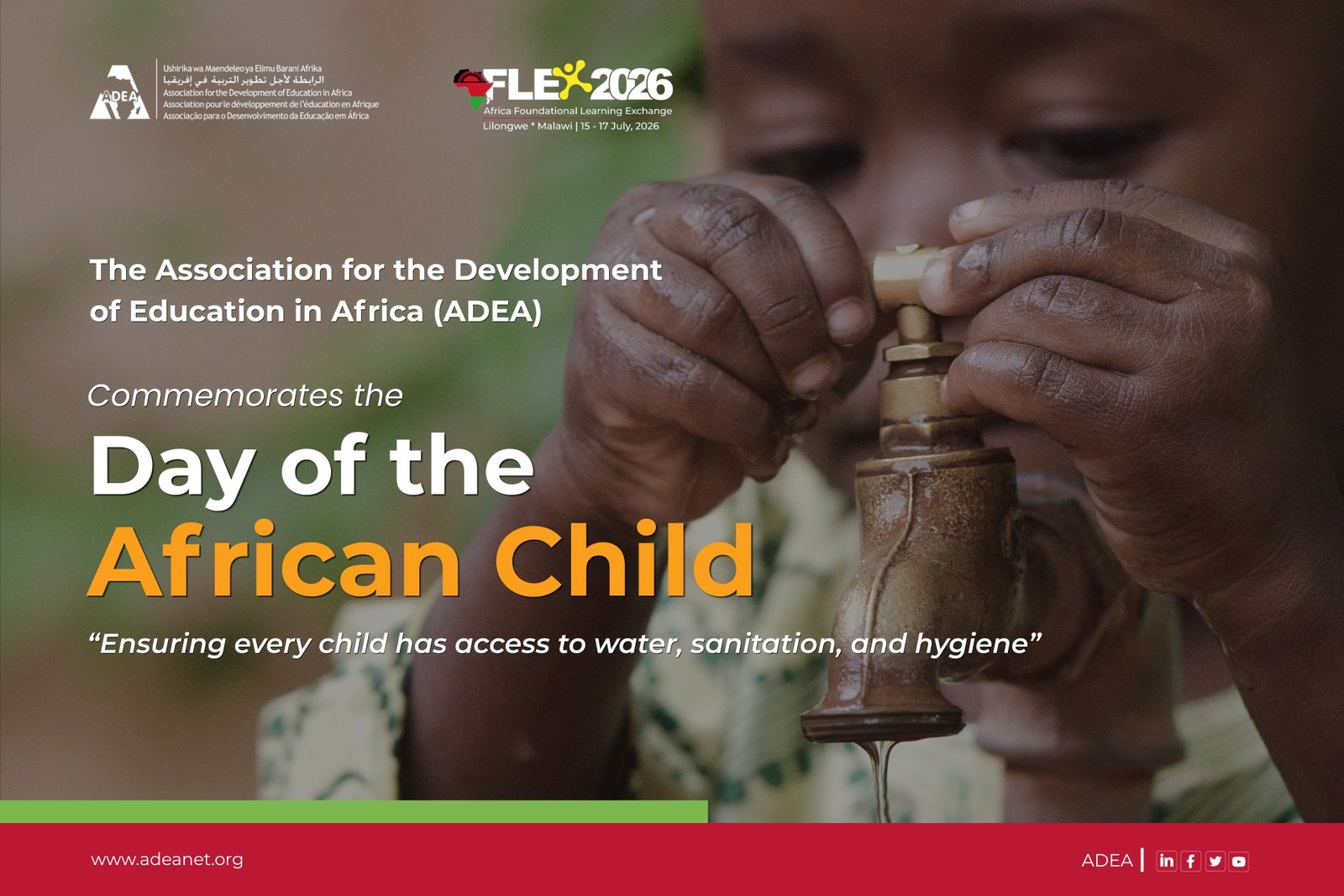
On this Day of the African Child, we honour the courage of the young people of Soweto who, on 16 June 1976, marched for the right to learn with dignity. Fifty years on, Africa’s children carry that same insistence — showing up to classrooms every day, determined to learn, to grow, and to build their futures. We celebrate their resilience and we commit, on their behalf, to removing every barrier that stands between them and the education they deserve — including the most elemental: clean water, safe sanitation, and basic hygiene.
The evidence we wust act on
Africa is home to the world’s youngest, fastest-growing population, and the potential that represents is extraordinary. But potential is only realised when children can learn in safe, dignified, functional environments. The school infrastructure data tells us we are not yet there: only 46% of schools in sub-Saharan Africa have access to basic water services, just 44% have basic sanitation, and a mere 26% have functional hygiene facilities (WHO/UNICEF Joint Monitoring Programme, 2025). According to the 2026 UNESCO Global Education Monitoring Report, sub-Saharan Africa accounts for nearly 30% of all out-of-school children globally — with approximately 98 to 100 million children and young people aged 6 to 18 currently excluded from learning (UNESCO GEM Report, 2026). A child who cannot access a clean toilet, who drinks from an unsafe source, or who lacks soap to wash her hands, is a child for whom the promise of education remains painfully out of reach.
When schools lack WASH facilities, the consequences ripple far beyond a missed lesson. Absenteeism rises, school dropout follows — disproportionately among adolescent girls — and the long-term effects compound across a child’s entire educational journey: from the foundational years when literacy and numeracy are first acquired, all the way through secondary school, when young people are preparing for adult life, work, and civic participation. Only 27% of adolescent girls in sub-Saharan Africa complete secondary education. The barriers that begin with a broken tap or an unusable latrine in primary school do not simply disappear as children get older — they follow them, narrowing futures at precisely the moment those futures should be opening up. We cannot speak seriously about foundational learning or secondary completion without speaking equally seriously about the environment in which that learning must take place.
WASH and Learning: an indivisible agenda from first grade to final year
At FLEX 2024 in Kigali, Africa’s education ministers and partners committed to ending learning poverty by 2035 — a bold declaration anchored in the Continental Education Strategy for Africa (CESA 2026–2035) and the broader vision of AU Agenda 2063. That commitment was further deepened at the 2025 ADEA Triennale in Accra, where 35 recommendations for continental education reform were adopted, several of them bearing directly on the quality and safety of learning environments. FLEX 2026, convening in Lilongwe, Malawi from 15–17 July, is a major ongoing accountability moment in that reform journey — measuring not just what has been committed, but what has actually changed for children on the ground.
The alignment of this year’s Day of the African Child theme with FLEX 2026’s core agenda is deliberate and powerful. The learning environment is not peripheral to education reform — it is the foundation on which all reform rests. A child cannot build reading skills, develop numeracy, or acquire the higher-order thinking demanded by secondary education in a school without functioning water and sanitation. FLEX 2026 will take this conversation where it belongs: into the rooms where policy decisions are made and resources are allocated.
FLEX 2024 taught us that foundational learning — and indeed all learning — is a shared responsibility, across Ministries of Education, Health and Gender; across communities, local governments and the private sector. This intersectoral lesson applies with full force to WASH. Improving school WASH is not a water ministry problem. It is not a health ministry problem alone. It is an education emergency. CESA 2026–2035 is clear: enabling environments for learning — including safe, functional, gender-responsive school infrastructure — are prerequisites, not add-ons, for achieving Africa’s education transformation goals.
A call to every decision-maker
ADEA calls on African governments to honour the commitment to allocate at least 20% of national budgets to education — and to ensure that investments in school infrastructure include robust WASH provisions as non-negotiable items. The 2025 Triennale recommendations are clear: improve school readiness and retention; prioritise gender-responsive learning environments; expand community participation in sustaining the learning process; and move decisively beyond policy declarations to full implementation with accountability.
We acknowledge the dedicated efforts of teachers who give their best in difficult conditions, of head teachers and school leaders who manage with inadequate resources, and of communities that go the extra mile to protect their children’s right to learn. Their commitment is a testament to what Africa can achieve when people are given even a fraction of the support they deserve. We honour their service today.
Providing universal quality education — foundational through secondary — that equips children with the skills they need could double GDP per capita by 2050 and lift 40 to 60 million people out of poverty. An extra year of education boosts individual incomes by 12.4% — rising to 14.5% for women. The economic case is settled. The moral case is settled. What remains is political will.
ADEA’s commitment
Through FLEX 2026, ADEA will convene African leaders, policymakers, practitioners and partners in Lilongwe to hold the continent accountable for the commitments made. We will provide evidence, facilitate peer learning, and ensure that the voices of the children we serve shape the conversations that determine their futures. Under the ADEA Strategic Plan 2024–2028 and the leadership of our Foundational Learning Champion, President Hichilema of Zambia, we are committed to translating political declarations into measurable, country-level results.
When every child has access to water, sanitation and hygiene, every child has a chance to learn, grow and lead. This June 16th, we do not merely celebrate Africa’s children — we renew our covenant with them. Let us build an Africa where every classroom is a safe place to dream, and every child — from their very first day of school to their last — arrives ready to learn and leaves ready to lead. The future of our continent depends not on what we intend, but on what we do. Now is the time to act.
