
Beyond the Commitment: Making Foundational Learning Last in Africa
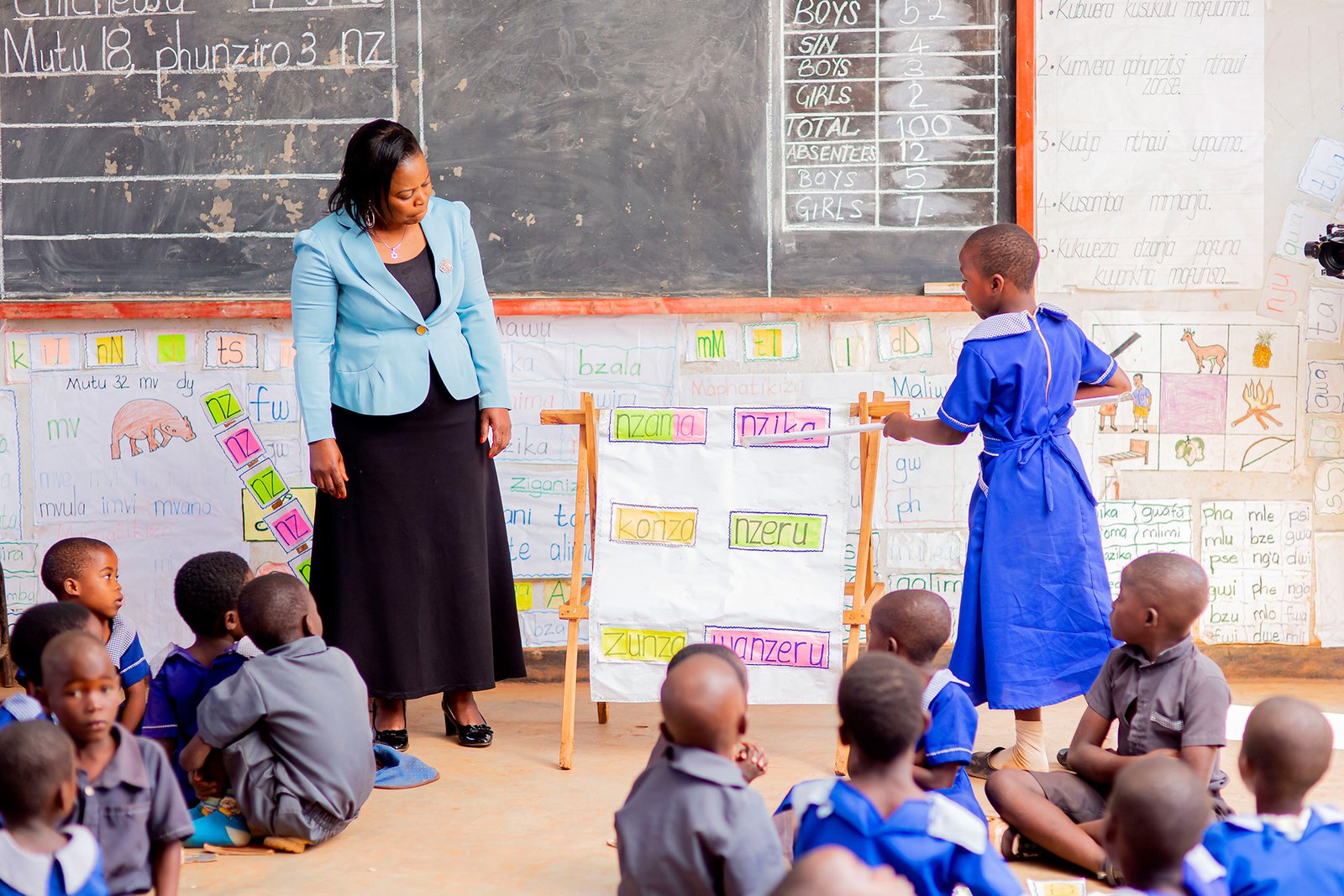
A year ago, one of the co-authors of this piece asked a simple but radical question alongside Dr. Oby Ezekwesili, Nigeria's former Minister of Education. It is one any parent, teacher, or minister could ask every day: “Did the children learn in school today”?
The 2026 edition of the Africa Foundational Learning Exchange (FLEX 2026) was the moment the continent tried to answer that question out loud. Forty-two countries came to Lilongwe to report on what has changed since the Kigali Declaration in 2024, and what they reported was real progress, not everywhere, and not evenly, but real. Tanzania's coaching model has lifted learning proficiency from 63.7% to 89.9%. Ghana's own coaching reforms have moved literacy outcomes from 19% to 79%. Some countries are still building the basic systems that others already have in place. But the direction across the continent is no longer in question.
As we mark the World Teacher’s Day, it is also important to note the urgency of these improvements clearly as there is a rapidly growing generation relying on them. Africa is home to the youngest and fastest-growing population on earth. Six in every ten people on the continent are under the age of twenty-five; by 2050, one in three young people will be African. It is imperative that we start making progress in our foundational learning reforms to ensure a better Africa.
The reforms we are describing are not simply about test scores. They are about equipping the generation that will make up Africa's workforce, its citizenry, and eventually its leadership, with the foundation everything else is built on. A demographic dividend is only a dividend if the generation behind it can read, reason, and calculate. Foundational learning is where that bet is won or lost, years before any of these young people enter a working market and beyond.
This is not only a story governments are telling about themselves. It is increasingly one citizens are telling too. Across the continent, parents, teachers and independent networks are asking the same question in their own communities and publishing what they find, evidence that does not wait for an official report to say whether a child can read. Political demand for foundational learning, quiet for so long, is now difficult to dismiss from any direction.
That is genuinely new, and it deserves to be said plainly, because it was not always true. What is also true, and worth saying just as plainly, is that demand is not the same as delivery. The Foundational Learning Action Tracker1 rates 52 countries at 2.7 out of 4 on average, meaning most governments across the continent now have the policy commitments in place, on paper, in declarations, in ministerial statements, but not yet the systems to carry them through. That gap is not a verdict on whether the demand is genuine. It is a question of whether demand has translated into action: is there a national strategy that names foundational learning as a priority? Are there evidence-based targets to track it? Is there a protected budget line to fund it? Are there institutions with a clear mandate to drive it? And is there a mechanism that holds the system accountable when it falls short, one that survives the minister who commissioned it? This is the work that does not make headlines. It is also the work that decides everything.
For governments, this means moving past declarations and pilot projects toward the less visible architecture of delivery: evidence based targets on foundational learning that define what progress looks like, costed national plans and budget lines that survive the next finance ministry reshuffle, data systems which tell us whether that progress is actually taking place, and institutions with a clear mandate to keep driving reform long after the officials who championed it have moved on. Political will opens the door. Institutional efforts will keep it open.
For partners like Hempel Foundation, it means a comparable shift. Financing the moment of commitment was the first step. Financing what comes after, the data systems, the accountability structures, the unglamorous work of helping governments and partners scale up promising programs, is harder, and it is where support is still needed.
We know this from our own partnership. In 2025, ADEA and the Hempel Foundation launched a two-year initiative, Promoting Better Governance: Enhancing Accountability and Capacity in Foundational Learning in Africa, which aims to strengthen accountability, governance, and data systems across six countries in Sub-Saharan Africa. It is built on a premise we both hold, that lasting change begins, as one of us put it at the time, with empowered, capable, and accountable institutions, not a single moment of goodwill.
This effort offers clear lessons for how philanthropy and development partners must evolve. First, funding must remain demand-driven, allowing countries to set and prioritize their own reform agendas. Second, partners must leverage their capital to support existing government systems and catalyze ongoing reforms, committing to the reforms around delivery, such as building data architecture and equipping mid-level changemakers. Finally, funders must commit to the long durations that actually enable systemic change to happen and avoid the attractive trap of creating parallel structures or initiatives.
Ultimately, this is the shift we both believe must happen next, demanding more from governments and partners alike. While it may not be a new insight, it is one we must restate relentlessly, until the focus moves permanently from high-level commitments and advocacy toward translating these results into day-to-day operations and ensuring the improvement of Foundational Learning for the children of Africa.
So we will keep asking the question we started with, because it is the only one that matters: did the children learn in school today? The measure of this moment will not be one good answer given at one conference. It will be whether our systems, our governments, and our partnerships can keep asking that question, and keep answering it honestly, long after FLEX 2026 is over. It will be whether, for the youngest continent on earth, the answer keeps getting closer to yes.
- The Foundational Learning Action Tracker (FLAT) is a global monitoring and accountability tool launched in September 2023 by UNICEF and the Hempel Foundation to track government progress on foundational learning in low- and middle-income countries.
