
ADEA, African Union and AU-IPED launch CESA Cluster to strengthen education governance, policy and finance
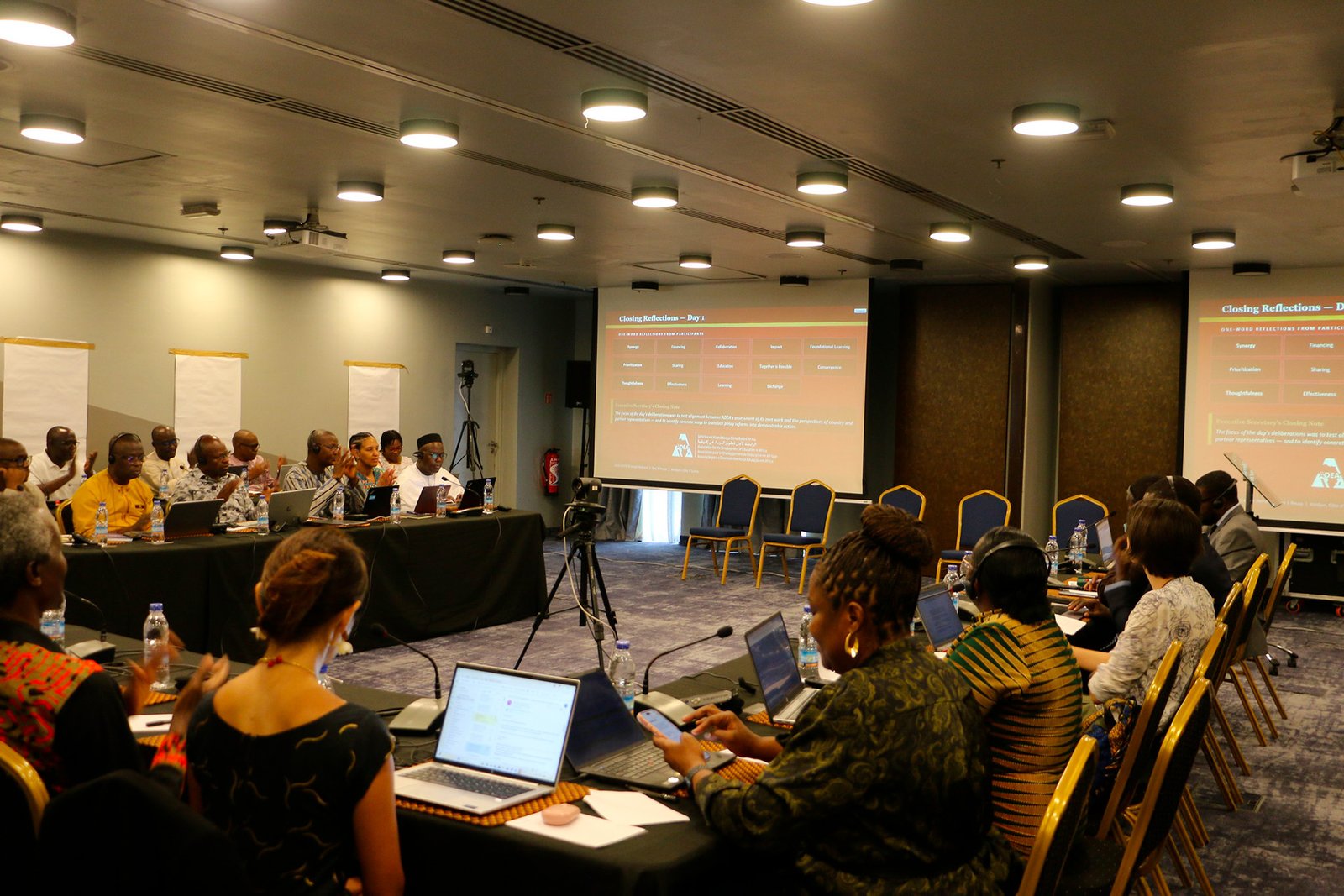
The African Union Commission’s Department of Education, Science, Technology and Innovation (AUC-ESTI) has inaugurated the Continental Education Strategy for Africa (CESA 2026–2035) Cluster on Education Governance, Policy and Finance, creating a new continental mechanism to strengthen education governance, policymaking, financing and partnerships across Africa.
The inaugural meeting, co-convened by the Association for the Development of Education in Africa (ADEA) and the African Union’s Pan-African Institute for Education for Development (AU-IPED) on Thursday, 1 October 2026, brought together 38 participants, including 16 director-level government officials from 13 African countries, as well as representatives of Regional Economic Communities (RECs), development partners, continental networks and civil society organizations.
The Cluster forms part of the implementation architecture for CESA 2026–2035, which provides the continental framework for transforming Africa’s education and training systems under the African Union’s Decade of Accelerated Action for the Transformation of Education and Skills Development in Africa (2025–2034). The CESA thematic clusters were formally launched in April 2026 in Nairobi to support Member States in translating the continental strategy into national and regional action.
Recognizing the central role of evidence-based policy, effective governance, sustainable financing and strong partnerships in education transformation, AUC-ESTI established the Education Governance, Policy and Finance Cluster to help move these priorities from continental commitments to practical implementation.
Opening the meeting, ADEA Executive Secretary Albert Nsengiyumva framed the Cluster as an opportunity to bring countries, regional institutions and partners together around a common objective: creating stronger enabling conditions for education transformation and turning shared evidence into better decisions, investments and coordination.
“Africa’s education agenda must be shaped with Africa, by Africa and for Africa.”
He emphasized that national experience should drive continental learning, with RECs helping to translate continental frameworks into regional action and partners aligning their support with country priorities. He also reaffirmed ADEA’s commitment to working with AUC-ESTI, AU-IPED and Cluster members to facilitate policy dialogue, strengthen knowledge exchange, support resource mobilization and communicate evidence capable of informing decision-making.
For Sophia Ashipala, Head of the Education Division at AUC-ESTI, the immediate challenge is to ensure that the Cluster produces practical results for Member States.
“Our task is to make CESA work for our Member States.”
She stressed the need to move beyond coordination to establish clear accountability for what will be delivered, by whom, within what timeframe and with what resources. Ultimately, she said, progress should be measured by whether the Cluster’s work makes a difference at country level.
AU-IPED Director Adoumtar Noubatour brought the discussion back to its ultimate purpose: ensuring that stronger governance, better policies and more sustainable financing translate into greater access to quality education and improved outcomes for African children and young people.
Presenting the Cluster’s mandate and proposed operational framework, ADEA Senior Programs Officer Shem Bodosaid its work would support implementation of both CESA 2026–2035 and the Continental TVET Strategy 2025–2034 by strengthening education system governance, evidence-based policymaking, financing mechanisms and multi-stakeholder partnerships across AU Member States and RECs.
The Cluster will also promote knowledge exchange and South–South cooperation, strengthen capacity and support the development of practical guidance, tools and policy products as evidence and country needs evolve. Its technical work will be organized around four thematic areas: Policy and Governance; Education Financing; Monitoring and Evaluation and SDG 4 Alignment; and Partnerships and Resources.
Presenting the draft workplan, Mr. Bodo stressed that it should serve as a shared framework for collective action rather than a compilation of individual partner activities.
“It will support countries in domesticating and reporting on CESA while contributing their experiences and lessons to continental learning.”
The Cluster will seek closer alignment between continental monitoring and Sustainable Development Goal 4, including indicators related to governance and education financing, while ensuring that African priorities and experiences inform engagement within the wider global education architecture.
Under the proposed structure, AUC-ESTI will provide strategic oversight, with ADEA serving as lead and AU-IPED as co-lead. ADEA will also serve as the Cluster Secretariat, with support from AU-IPED.
Facilitating discussions on participation, AU-IPED Policy Officer Lukman Jaji explained that membership is open to countries, RECs, institutions and organizations with the mandate, commitment and capacity to contribute to the Cluster’s work. Thematic working groups will provide the principal avenue for technical engagement, while experts, researchers and practitioners may also contribute specialized expertise where required.
Member States and partners demonstrated early ownership by expressing interest in leading or participating in the thematic working groups. Nigeria and Mauritius expressed interest in Policy and Governance; Comoros and Gabon, alongside UNICEF and UNESCO GEMR, in Education Financing; Kenya and South Africa, working with UIS, in Monitoring and Evaluation and SDG 4 Alignment; and Zambia in Partnerships and Resources. Countries will also designate national focal points, creating more direct interfaces between the Cluster and national and regional education systems.
The discussions also identified areas where the working groups could provide practical value, including domestic resource allocation and innovative education financing, constraints affecting budget prioritization and execution, stronger financing benchmarks, better use of quality education data, and closer alignment between national, continental and SDG 4 indicators.
The next phase will focus on formalizing membership of the working groups, refining the workplan and translating the priorities identified during the inaugural meeting into specific areas of work. Proposals included a policy dialogue series, knowledge products such as a report on CESA Strategic Area 1, and the use of regional and continental convenings to sustain policy dialogue and knowledge exchange.
For ADEA, the inaugural meeting represents an important step in translating its continental mandate into a practical mechanism for supporting implementation of Africa’s education priorities. By bringing governments, regional institutions and partners around a common framework for action, the Cluster is intended to strengthen the governance, policy, financing and partnerships needed to move CESA 2026–2035 from continental commitments to measurable results.
