
African policymakers explore sustainable learning assessments in second episode of webinar series
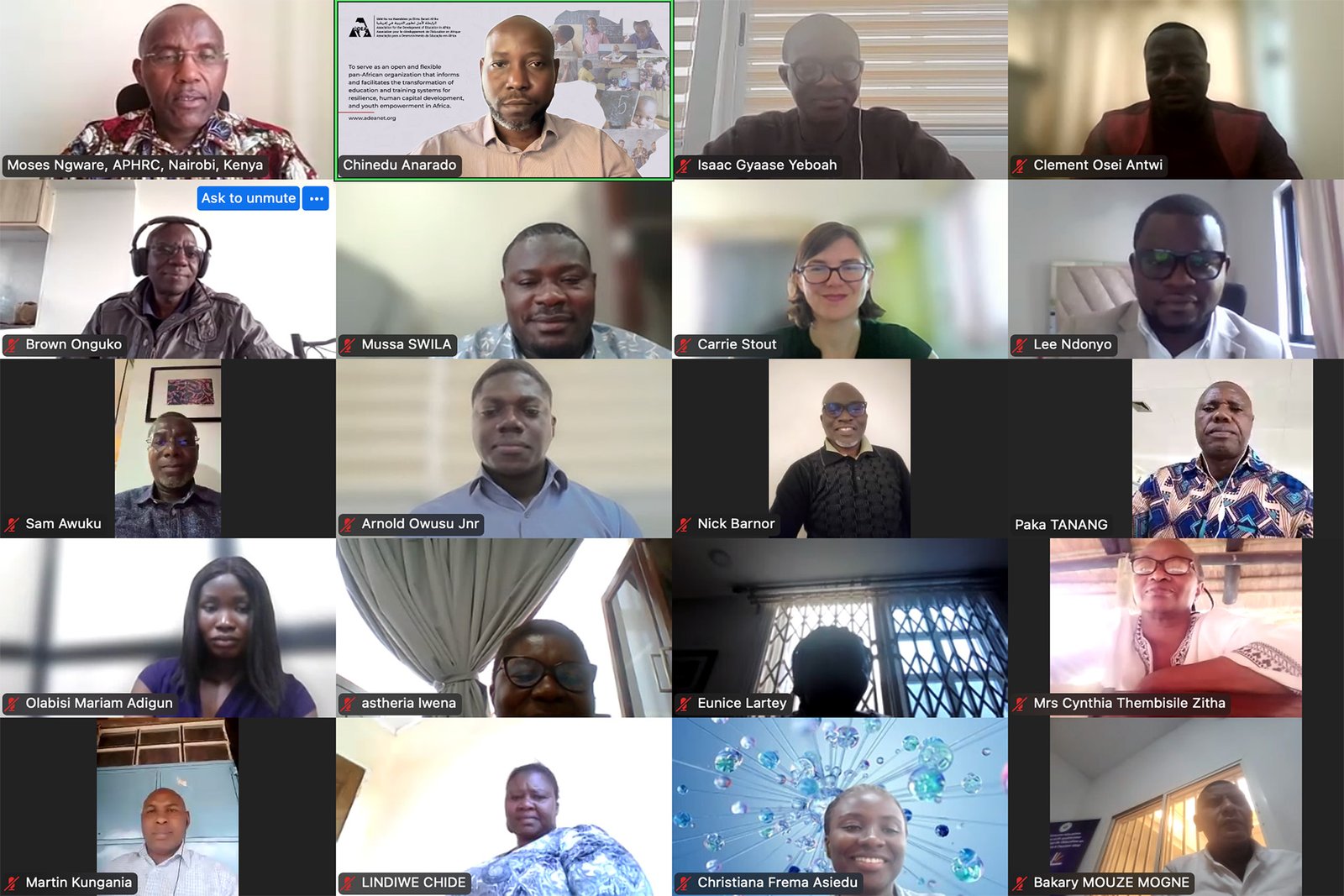
On Thursday September 4th, the Association for the Development of Education in Africa (ADEA), in collaboration with the Learning Generation Initiative (LGI) of the Education Development Centre (EDC), successfully hosted the second episode of the Africa Policymaker Forum (APF) webinar series. The session focused on developing sustainable learning assessment systems to strengthen foundational learning across the continent, spotlighted Zambia’s experience.
In his opening remarks, ADEA Executive Secretary Mr. Albert Nsengiyumva emphasized that while access to schooling in Africa has improved, millions of children still lack basic literacy and numeracy skills. He called for urgent, evidence-based action to achieve the Continental Education Strategy for Africa (CESA) and the Sustainable Development Goals (SDGs).
“This is how we will grow Africa into a formidable region once again,”
Mr. Nsengiyumva said, stressing the importance of high-quality assessments and data systems. Drawing on lessons from India’s education reforms, he highlighted three key levers for progress including, strong partnerships between government and civil society, effective governance that connects education levels and data-driven policymaking.
Opening the session, Dr. Clement Abas Apaak, Deputy Minister of Education of the Republic of Ghana, stressed the need for both assessment of learning (to measure achievement) and assessment for learning (to improve teaching practices). He underlined the importance of accountability and ensuring that learning data benefits marginalized groups—including girls, rural learners, and children with disabilities. Dr. Apaak also announced Ghana’s upcoming role as host of the ADEA Triennale on Education and Training this October, where the country will showcase its reforms and reaffirm its commitment to resilient and inclusive education systems.
In the session’s lead presentation, the Lead Researcher at the African Population and Health Research Centre, Dr. Moses Ngware, provided a comprehensive overview of assessment types—summative, formative, and assessment as learning—and their role in improving learning outcomes. He outlined that assessments can be made sustainable if they are cost-effective and scalable, support equity and inclusion and inform teaching and resource allocation. Dr. Ngware shared examples of how learning assessments are driving change across Africa—from shaping public debate in Kenya to informing language-of-instruction policies in Rwanda and supporting remedial education in Namibia.
The session featured a spotlight on Zambia’s Primary Literacy Programme (PLP), with insights shared by Dr. Lee Kamabanikwao Ndonyo. He highlighted the Let’s Read Project, implemented by the Education Development Centre, which reached more than 4.5 million learners across 5,212 schools in five provinces between 2019 and 2024. The project aimed to improve reading outcomes for 1.4 million children by integrating standardized, technology-enabled assessments into the education system.
Zambia’s approach combines formative classroom assessments with Standardized Literacy Assessments (SLAs), which measure phonemic awareness, vocabulary, fluency, comprehension, and writing in seven local languages. Assessments are administered twice per term, ensuring consistent scoring and comparability across regions. A key innovation was the Enhanced Performance Tracking System (ePTS), a web-based tool that allows teachers to input reading scores, track learner progress, and adjust instruction based on real-time data.
During the closing Q&A session, panelists from Tanzania, Ghana, and Côte d’Ivoire discussed challenges including overcrowded classrooms, teacher feedback loops, and affordability of digital tools. Ghana’s Mr. Clement Osei Antwi stressed that assessments must provide actionable insights—not just scores—to guide teachers and inform parents.
The webinar concluded with a strong call for collaboration and peer learning, as African countries strive to align around common assessment frameworks, tools, and metrics.
Launched in May 2025, the Africa Policymaker Forum series brings together policymakers, researchers, and education stakeholders to promote data-driven solutions for foundational learning. The effort is supported by the UK Foreign, Commonwealth & Development Office (FCDO) through the What Works Hub for Global Education, and brings together senior policymakers from across the continent. The next episode in the eight-part Africa Policymaker Forum series is scheduled for February 2026.
