
Angola embarks on a journey to transform its education data systems
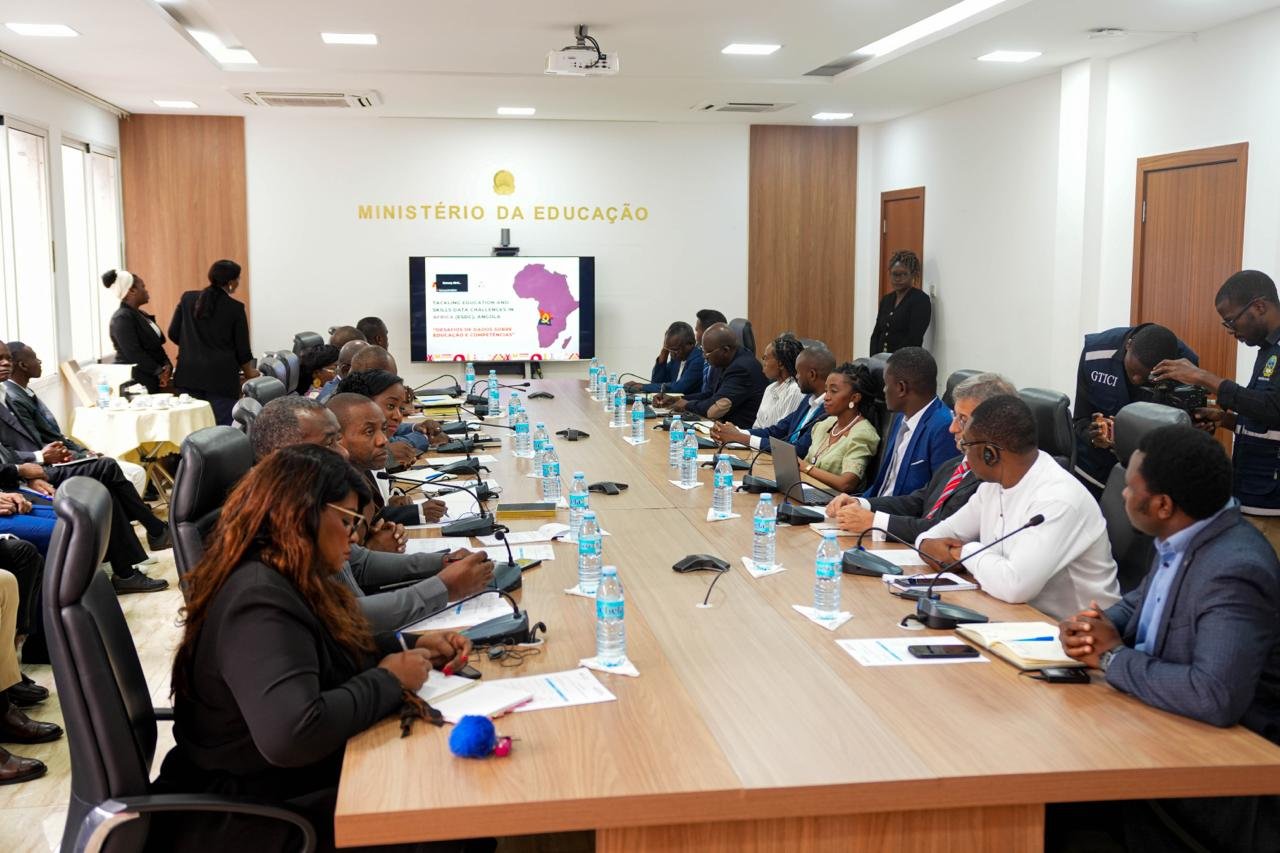
Luanda, Angola, 5–7 August 2026
Angola has taken a decisive step toward strengthening the management, analysis, and use of education and skills data, with the official launch of the Tackling Education and Skills Data Challenge (ESDC) initiative in Luanda from 5 to 7 August 2026. The launch brought together representatives of the Ministry of Education, the Association for the Development of Education in Africa (ADEA), in-country technical support institution Mwango Brain, and key education and data stakeholders to mark the beginning of a structured, multi-year effort to transform how Angola produces and uses education data to drive education policy systems and decision-making.
Speaking on behalf of the Minister of Education at the launch, Secretary of State for Secondary Education Soraya Kalongela set the tone for the initiative's ambition:
"We can't talk about expanding the education system without modernising the management of education itself."
She underscored that the strengthening of Angola's national education database — and the capacity to translate statistical data into policy — is a prerequisite for every reform the Ministry intends to pursue under the National Development Plan 2023–2027. She further highlighted the need to strengthen processes of collecting, analysing, handling, sharing, and using statistical data, which remain a significant challenge across the education sector.
The ESDC initiative is implemented by ADEA in partnership with the Mastercard Foundation Centre for Innovative Teaching and Learning (CITL). It supports up to 30 African countries to strengthen the production and use of quality education and skills data for policy, planning, monitoring, and evaluation. Angola was among the first cohort countries to join the ESDC initiative in 2024 and has now transitioned into full implementation, with Mwango Brain serving as the national technical institution supporting delivery. The launch builds on a longstanding partnership between ADEA and Angola's Ministry of Education and comes at a strategic moment — as the Ministry advances discussions on a comprehensive EMIS legal framework and a modernised National Education Management Information System.
A needs assessment conducted ahead of implementation identified specific areas requiring strengthening across Angola's education data cycle — from collection and verification at school level through to analysis, interpretation, and policy application at national and sub-national levels. The initiative will address this full cycle, supporting improvements not only in data production but in the wider institutional capacities required to turn data into evidence and evidence into action.
Speaking on behalf of Executive Secretary Albert Nsengiyumva, ADEA Senior Programs Officer Shem Bodo highlighted that the initiative aligns with Angola's ongoing efforts to strengthen data use in decision-making:
"The ESDC is coming to support this process with a strong focus on capacity strengthening."
Planned interventions will operate at both national and sub-national levels, targeting the capacity of Ministry staff, data managers, and education officials across the system.
Angola already has established foundations for education data production, including an Annual School Census, an Education Statistical Yearbook, and an existing EMIS. The ESDC initiative will build on these foundations, strengthening the systems, institutions, and human capacity needed to ensure that quality data are produced, understood, and used to inform decisions across the education sector.
The expected results are concrete: a robust and sustainable EMIS; improved capacity among Ministry staff and relevant stakeholders to formulate evidence-based policies; and greater use of quality education and skills data in decision-making — strengthening the link between reliable data, policy, planning, and action at all levels of the system. Mwango Brain will lead the technical implementation, including project architecture, methodological development, capacity strengthening of national technical staff, and support to planned activities — with a deliberate emphasis on knowledge transfer and national ownership to ensure long-term sustainability.
The launch was formalised through the signing of an Implementation Agreement between ADEA and Angola's Ministry of Education, anchoring the partnership in a clear accountability structure as the initiative moves into its delivery phase.
Angola is not starting from scratch. It is building on what already exists — and investing in the institutional capacity to make it work better, smarter, and more sustainably for the learners and communities that depend on it. This is one of the ways we are supporting our member countries to build resilient education systems.
