
Tanzania and Côte d'Ivoire initiative efforts to strengthen data use in education policy
Abidjan, February 2026
The Ministries of Education in Cote d’Ivoire and Tanzania have taken a significant continental step forward to strengthening data-led education policy by launching the Tackling Education and Skills Data Challenge (ESDC) initiative in the two countries within two weeks — Tanzania and Côte d'Ivoire. The back-to-back launches signal the start of an accelerating effort to transform how African nations produce, manage, and use education and skills data to drive better policy and learning outcomes.
In Tanzania, the Ministry of Education, Science and Technology officially launched the ESDC initiative, having commissioned the Eastern Africa Statistical Training Centre (EASTC) to design and deliver a comprehensive capacity-strengthening program for officials in the Ministry on data use.
The first activity, held from 16–20 February 2026 in Morogoro, brought together key technical staff and stakeholders for a training focused on aligning national, continental, and global monitoring frameworks. The course targeted two core objectives: strengthening participants' knowledge of education indicators and analytical methods and enhancing their ability to assess the effectiveness of education policies.
Speaking at the launch, Director of Monitoring and Evaluation, at the Ministry in Tanzania, Petro Makuru, underscored that accurate, high-quality data is fundamental to planning, implementing, and evaluating education, science, technology, and innovation policies. He highlighted persistent challenges in managing the data chain from the school level through to the national level and stressed the critical need to build internal professional capacity in data collection, verification, analysis, and utilization.
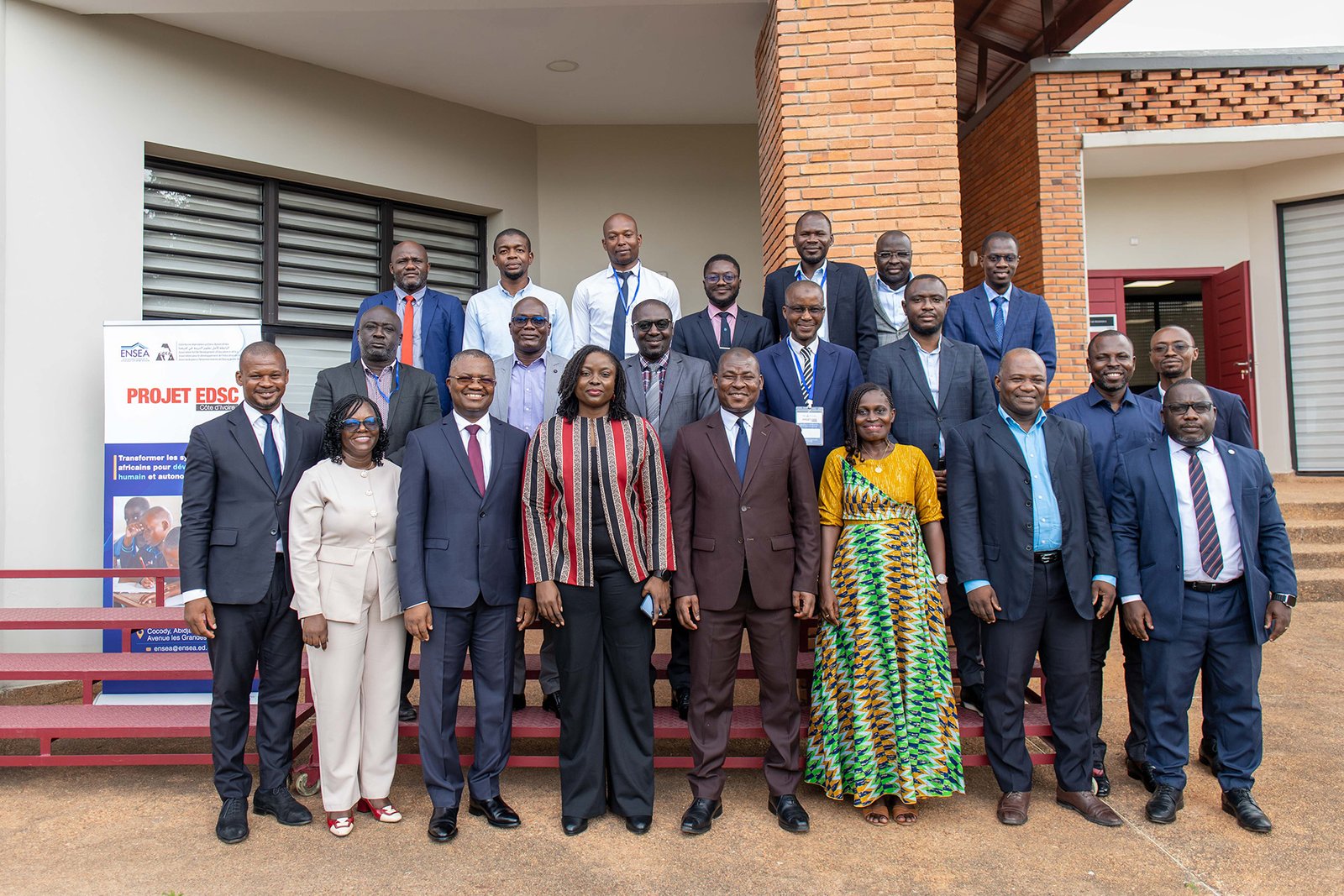
Hot on the heels of the Tanzania launch, the Ministry of National Education and Literacy in Côte d'Ivoire engaged the École Nationale Supérieure de Statistique et d'Économie Appliquée (ENSEA) to lead its national capacity-strengthening program. The first training activity, which commenced on 23 February 2026, focused on research design — equipping technical staff and stakeholders with a comprehensive and operational understanding of the full research process, from problem formulation to the production of decision-making tools. Participants are being guided to develop rigorous and consistent research protocols that can be immediately applied to preparing policy briefs and tracking results frameworks.
The training is designed to reinforce the Ministry's capacity to generate and apply high-quality evidence in support of education reforms and strategic investments.
These capacity strengthening efforts come against the backdrop of a well-documented data challenge across the continent. According to the UNESCO Institute for Statistics, only 17 of Africa's 55 countries have data for SDG Indicator 4.1.1 on foundational literacy and numeracy, while just 14 countries in sub-Saharan Africa have reported data on youth and adult participation in formal and non-formal education. Poor data continues to hamper the ability of governments to make evidence-based policy decisions on education and skills.
The ESDC initiative — a partnership between ADEA and the Mastercard Foundation Centre for Innovative Teaching and Learning (CITL) — responds to this challenge. The program will support up to 30 African countries to strengthen their capacity to produce, analyze, and use quality education and skills data for improved policy, planning, program implementation, monitoring, and evaluation.
Tanzania and Côte d'Ivoire are among the first 11 pilot countries, alongside Angola, Kenya, Mauritius, Nigeria, Rwanda, Senegal, South Africa, The Gambia, and Zambia. Subsequent phases will scale to the remaining 19 countries. Rwanda is the first country in this cohort to initiate capacity strengthening for a cadre of education officers at the district level.
The activities in these countries represent the first steps in structured, multi-year training series designed to embed a culture of data-driven decision-making at all levels of their respective education systems. Further technical workshops are planned throughout 2026 and beyond.
